- Terimakasih telah mengunjungi Website kami -------------- Informasi SPMB kini tersedia di website ini --------------- Kunjungi Galeri untuk melihat kegiatan siswa --------------- Buka prestasi untuk melihat siswa-siswi berprestasiTerimakasih telah mengunjungi Website kami -------------- Informasi SPMB kini tersedia di website ini --------------- Kunjungi Galeri untuk melihat kegiatan siswa --------------- Buka prestasi untuk melihat siswa-siswi berprestasiTerimakasih telah mengunjungi Website kami -------------- Informasi SPMB kini tersedia di website ini --------------- Kunjungi Galeri untuk melihat kegiatan siswa --------------- Buka prestasi untuk melihat siswa-siswi berprestasi
- Terimakasih telah mengunjungi Website kami -------------- Informasi SPMB kini tersedia di website ini --------------- Kunjungi Galeri untuk melihat kegiatan siswa --------------- Buka prestasi untuk melihat siswa-siswi berprestasiTerimakasih telah mengunjungi Website kami -------------- Informasi SPMB kini tersedia di website ini --------------- Kunjungi Galeri untuk melihat kegiatan siswa --------------- Buka prestasi untuk melihat siswa-siswi berprestasiTerimakasih telah mengunjungi Website kami -------------- Informasi SPMB kini tersedia di website ini --------------- Kunjungi Galeri untuk melihat kegiatan siswa --------------- Buka prestasi untuk melihat siswa-siswi berprestasi

What is a Normal Balance in Accounting?
A contra account is one which is offset against another account. So for example there are contra expense accounts such as purchase returns, contra revenue accounts such as sales returns and contra asset accounts such as accumulated depreciation. Each of the accounts in a trial balance extracted from the bookkeeping ledgers will either show a debit or a credit balance. The normal balance of any account is the balance (debit or credit) which you would expect the account have, and is governed by the accounting equation. Temporary accounts are generally the income statement accounts. In other words, the temporary accounts are the accounts used for recording and storing a company’s revenues, expenses, gains, and losses for the current income statement accounting year.
Normal Credit Balance:
This shapes the expenses normal balance financial story of both personal and business finances. For example, assets and expenses, which are about spending or using up value, normally have a debit balance. Meanwhile, liabilities, equity, and revenue represent money coming in or claims on the company. When normal debit balances and tax planning intersect, it’s like finding the secret passage in a financial maze. By thoroughly understanding the nature of your expense accounts’ debit balances, you’re primed to make strategic decisions that could benefit your tax position.

Role of Normal Balances in Maintaining Accurate Financial Records
This considers things like the economy, recovering from big events, and planning finances. The same rules apply to all asset, liability, and capital accounts. With its intuitive interface and powerful functionality, Try using Brixx to stay on top of your finances and manage your growth. Liabilities often have the word “payable” in the account title. Liabilities also include amounts received in advance for a future sale or for a future service to be performed. A temporary account used in the periodic inventory system to record the purchases of merchandise for resale.
What Constitutes a Normal Balance for Different Accounts
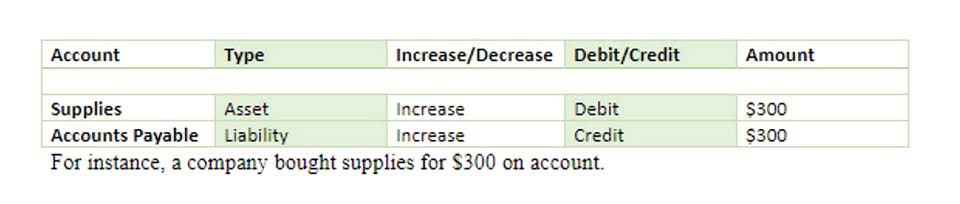
Debit simply means on the left side of the equation, whereas credit means on the right hand side of the equation as summarized in the table below. When companies make advance payments, they often do so for practical reasons. Sometimes it’s to secure a discount, like getting a better rate on a year’s worth of insurance paid upfront. Other times, it’s simply required—a landlord might want the first and Cash Flow Management for Small Businesses last month’s rent before handing over the keys. An account in the general ledger, such as Cash, Accounts Payable, Sales, Advertising Expense, etc. Its abbreviation is dr. (Apparently the Italian or Latin word from which debit was derived included an “r”).
- Understanding the relationship between normal balances and the categories of assets, liabilities, and equity is crucial for maintaining balance in the accounting system.
- Tread carefully to avoid the common pitfalls where the impact of debits and credits gets muddled.
- As we can see from this expanded accounting equation, Assets accounts increase on the debit side and decrease on the credit side.
- In double-entry bookkeeping, asset accounts typically carry a debit balance.
- In double-entry bookkeeping, the normal balance of the account is its debit or credit balance.
Income Statement
It’s what makes sure every financial statement is right, by showing how transactions change between debit and credit. Dive into T-accounts and you’ll find a method of accounting visualization that transforms abstract transactions into tangible illustrations. Like training wheels for accountants, T-accounts provide a safe and clear pathway for learners to navigate the twists and turns of financial record-keeping. They break down the complexity of a ledger into bite-sized visuals, making the relationship between debits and credits crystal clear.

0 Komentar

Link Terkait

Beri Komentar